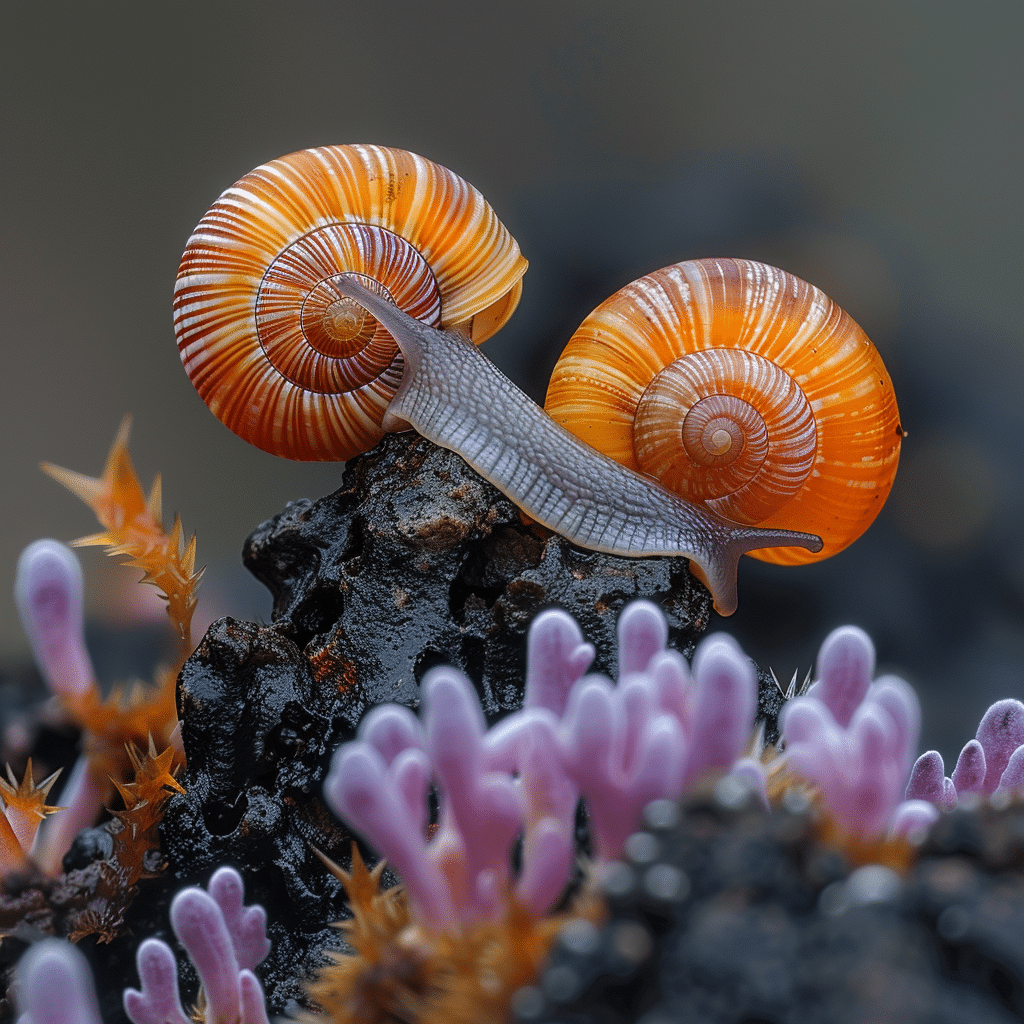
Beneath the ocean’s churning waves, in the fiery furnaces of underwater volcanoes, creeps a creature so hardy, so bizarre, it could give the Tardigrade a run for its money in the durability stakes. Let’s dive deep and unveil the mysteries of the volcano snails, nature’s own little metallurgists, and unsung heroes of the abyssal depths. Buckle up for a journey to the seafloor, where science melds with the incredulous, as we unwrap the iron-clad secrets of these enigmatic gastropods.
A Glimpse into the World of Volcano Snails
Imagine the most inhospitable places on Earth – then plunge several thousand feet underwater, and you’ll find the stomping grounds of the volcano snails. Like something out of a Jules Verne novel, these snails, such as the noteworthy Alviniconcha strummeri And Ifremeria nautilei, sprawl across hydrothermal vents where superheated water bursts from the Earth’s crust.
Studying these snails isn’t just a whimsical pursuit; it’s a plunge into life’s adaptability. They are extremophiles, organisms that thrive in conditions fatal to most life forms. Unwrapping their survival secrets offers us potential keys to unlocking the mysteries of life’s resilience, both on our blue dot and possibly beyond.
Secret #1: Surviving in Extreme Heat
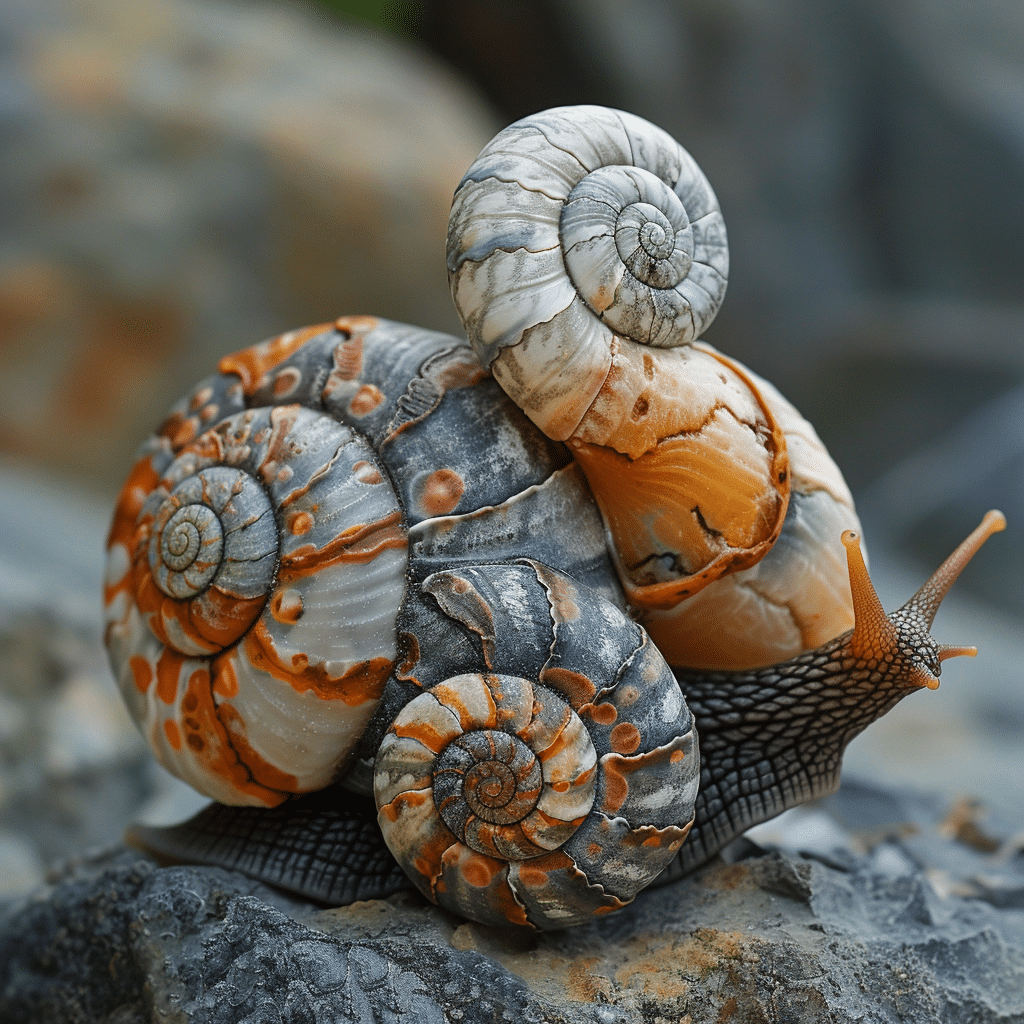
How on Earth (or beneath it) do these snails not cook in their shell? The answer lies in their remarkable physiological adaptations. These snails boast a heat-resistant shell which is more than just home—it’s a sophisticated suit of armor against lethally high temperatures, proved to withstand exposures of up to 750°F!
But wait, there’s more. The shell, swirling innards 2-3 times, offers the first clue—it’s a labyrinthine heat sink. The snail’s shell is also teaming with heat-loving bacteria in its microbe rich gut, a bustling metropolis where microbial tenants pay their rent not in cash but in energy, keeping the snail energized sans a need for conventional alimentation.
| Attribute | Detail |
|---|---|
| Common Names | Volcano snail, Chrysomallon squamiferum, scaly-foot gastropod, sea pangolin, magma snail, lava snail |
| Diet | Reliant on endosymbiotic bacteria for nutrition through chemoautotrophy; does not need to actively eat |
| Unique Feature | Incorporates iron into exoskeleton; the only known animal with this trait |
| Shell Description | Inward swirling shell (2-3 times); composed of three layers including an organic outer layer, a middle layer of iron sulfides, and a thick inner layer of aragonite |
| Sclerites | Hardened scale-like structures surrounding snail’s foot |
| Tentacles | Two cephalic tentacles |
| Eyes | None |
| Size Variation | Younger individuals have smaller shells and sclerites |
| Reproduction | Not explicitly detailed; generally assumed to follow gastropod reproductive behavior |
| Natural Predators | Venomous snails, crabs |
| Habitat | Deep-sea hydrothermal vent fields, namely in the Indian Ocean |
| Special Habitat Requirements | Lives in diffuse fluids of hydrothermal vents; requires specific temperature range (2-10 °C), with a preference for approximately 5 °C |
| Distribution | Endemic to three known vent fields: Kairei, Longqi (Dragon), Edmond |
| Conservation Status | As of prior knowledge cutoff in 2021, listed as Endangered on the IUCN Red List due to the specificity of habitat and threats from deep-sea mining activities |
Secret #2: A Metal Armored Defense
Ever heard of a snail with a spine of steel? The scaly-foot gastropod, also known as Chrysomallon squamiferum, or the lava snail, is the only animal in the world known to incorporate iron into its exoskeleton, formed through layers of iron sulfide deposited onto their scales like a fine mail coat.
While most snails would prefer to just hide away in their shells, these snails laugh in the face of their predators with a metallic defense. This evolutionary masterpiece not only deters predators but is also a stunning example of life’s adaptability. It’s no wonder scientists liken them to tiny knights with iron-clad defenses dwelling in the deep.
Secret #3: Symbiosis in the Volcanic Depths
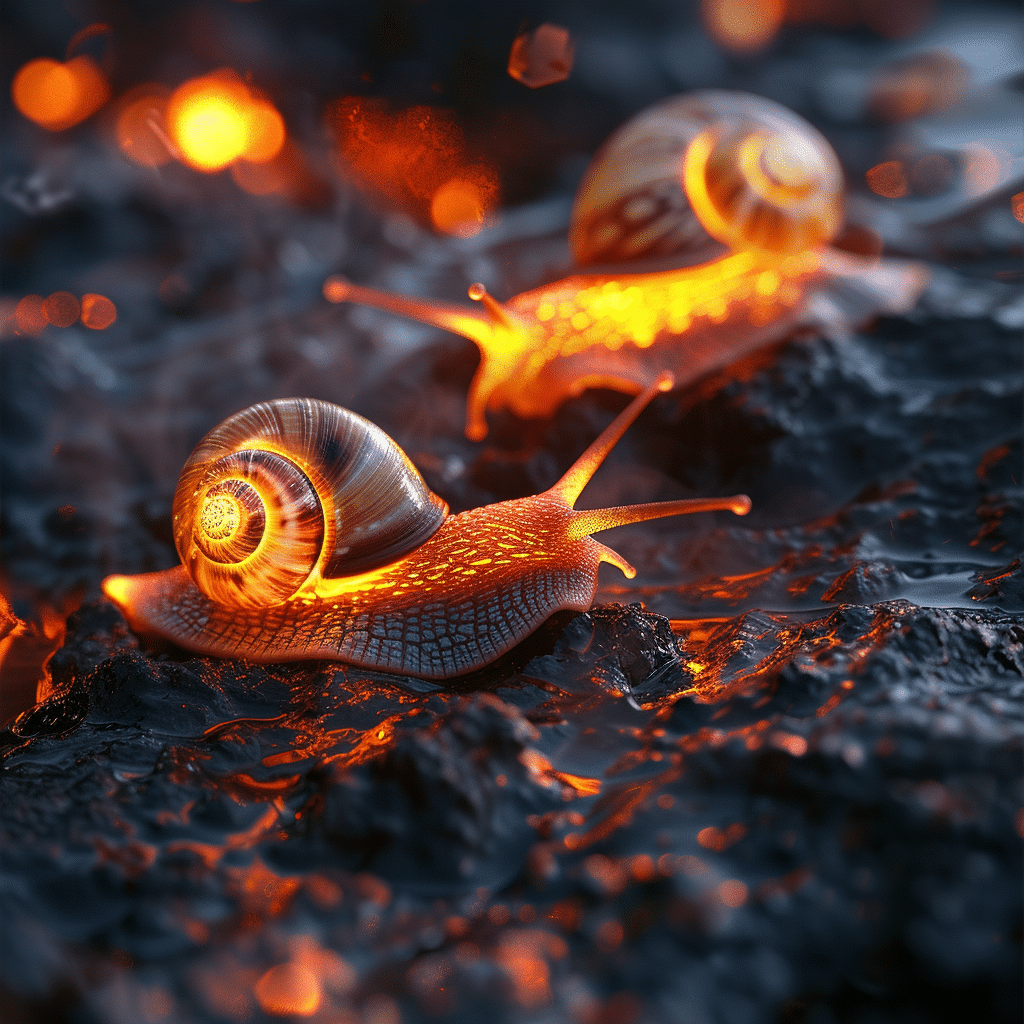
At the heart of each snail is a garden of chemosynthetic bacteria, turning what would be volcano snails’ poison – lethal sulfide and passing carbon dioxide – into something quite extraordinary: energy. This partnership is like an undersea rendition of the classic Stevie Wonder Songs, a melodious synchronicity of life’s elements.
The impact of this survival strategy is profound, painting a picture where life not only endures but thrives in the most extreme of environments. The snails’ incredible interdependence could have future implications on how we perceive and harness biological processes.
Secret #4: The Snails’ Role in Deep-Sea Ecosystems
Moving on from how volcano snails live to what they live for, these snails are unassuming stewards of biodiversity in their deep-sea realm. Recent research suggests these snails contribute significantly to the nutrient cycles in these ecosystems, breaking down and recycling materials that would otherwise be locked away.
Imagine the knowledge we could glean about biotechnology or medicine by studying the enzymes and compounds within these creatures. The potency of Natural spring water Pales in comparison to how these snails might revolutionize healing and sustainability – the possibilities are as vast as the depths they inhabit.
Secret #5: Indicators of Seafloor Volcanic Activity
In a twist that could win the hearts of science fiction aficionados, volcano snails might soon play a role as bioindicators for volcanic activity underwater. Why send in robots when you can monitor the snails? A surge or dip in snail populations can give us the lowdown on when the Earth is likely to shake, rattle, and roll.
It’s not often that the San Francisco 49ers quarterback Would have anything in common with a snail, but just as the former reads the field for oncoming defense, these snails could be our signal for impending seismic events, potentially saving lives and building resilience in communities near these underwater titans.
The Ongoing Enigma: What Else Do Volcano Snails Hide?
Despite the strides in research, volcano snails remain as enigmatic as Lola Lyrics. Dark and elusive as the oceanic trenches they inhabit, they carry untold stories and unsolved mysteries within. But reaching them is no easy feat, as technological and logistical challenges are as daunting as their ecological niche is deep.
Researchers are keen on unveiling further secrets—what other mysteries are locked within their iron shells, what tales of survival can they regale? As technology advances, so too will our ability to venture deeper and unravel more of life’s tenacious tales.
Conservation Challenges Facing Volcano Snails
Now, here’s the rub—these iron-clad wonders are under threat. Deep-sea mining and climate change loom over their habitat like dark clouds, threatening the stability of their sulfurous havens. While these snails may be tough as nails, their very specialized niche leaves them vulnerable.
Conservation efforts are as necessary as they are challenging. The question becomes, akin to navigating California finance lender license search, how do we reconcile human endeavors with the lives of these cryptic creatures? We must find and apply effective protective measures to ensure these snails – and the unknown potential they carry – aren’t lost to the annals of extinction.
Conclusion: Embracing the Heat – The Future of Volcano Snail Research
To recap, volcano snails are indeed hot property in the scientific community. From survive to thrive, they showcase the incredible resilience of life in the most extreme of environments. Understanding the mechanics and biology of these snails doesn’t just offer us insights into the abyss; it might just shine a light on the potential durability of life on Earth and other planetary bodies.
The future of volcano snail research is ablaze with potential. As we push the envelope, emboldened by a vision as vast as the ocean’s own expanse, our journey with these fire-forged gastropods is bound to revolutionize our understanding of biology’s limits and perhaps redefine our search for life across the cosmos. Here’s to the small, the scaly, and the iron-clad – the marvelous volcano snails!
Unveiling the Mysteries of Volcano Snails
Alright folks, fasten your seatbelts as we dive into the hot and steamy world of volcano snails. These critters are tougher than a two-dollar steak and have some cool tricks up their shells that’ll blow your mind!
Built Tougher than a Dinosaur
When you think of tough creatures from the past, the mighty Tylosaurus Might come to mind, right? Well, these volcano snails can give ol’ Tylosaurus a run for its money! With their iron-clad shells, they don’t just survive near hydrothermal vents – they thrive. Now, that’s what I’d call extreme living!
Fuzzy Snails? You Bet!
Think dinosaurs with feathers sound strange? Consider this, the ancient Yutyrannus Had a feathery coat, and similarly, our snazzy volcano snails sport a layer of what looks like hair! Technically, those are scales, but let’s not split hairs over it; these features protect them from the heavy metals and toxins that come with the thermal vent territory.
Adaptation Gymnasts
These snails don’t skip shell day, no sir! They’re like underwater bodybuilders doing Rear Delt Flys Daily, adapting their bodies to the rigors of their environment. Their super snail power isn’t lifting weights; it’s growing a shell made of iron sulfides—now that’s heavy metal, literally!
Survival of the Hottest
Talk about living on the edge! Volcano snails are found chilling (well, not literally) in places that’d cook your Sunday roast in seconds. That’s right, their homes are up to 750 degrees Fahrenheit (400 degrees Celsius), and they’re not even breaking a sweat. The secret? Super snails come with a built-in heat shield!
Under Pressure
Alright, so not only can these snails handle temperatures that’d make you melt faster than ice Cream In the sun, but they’re also unruffled by the pressures that would squish us flatter than pancakes. We’re talking pressure that rivals the heavyweights of the ocean, and it doesn’t even muss their hair… err, scales!
So, what’s the takeaway from this swagger of snail sagacity? Volcano snails are so cool they’re hot. From rocking a medieval armor-like shell to sporting a funky fresh hairdo, these critters take living on the volcano’s edge to a whole new level. With the tenacity of a dino and muscles to boot, they’re rocking the ocean floor and teaching us a thing or two about survival. Keep it sizzling, volcano snails, you’re the rock stars of the sea floor!
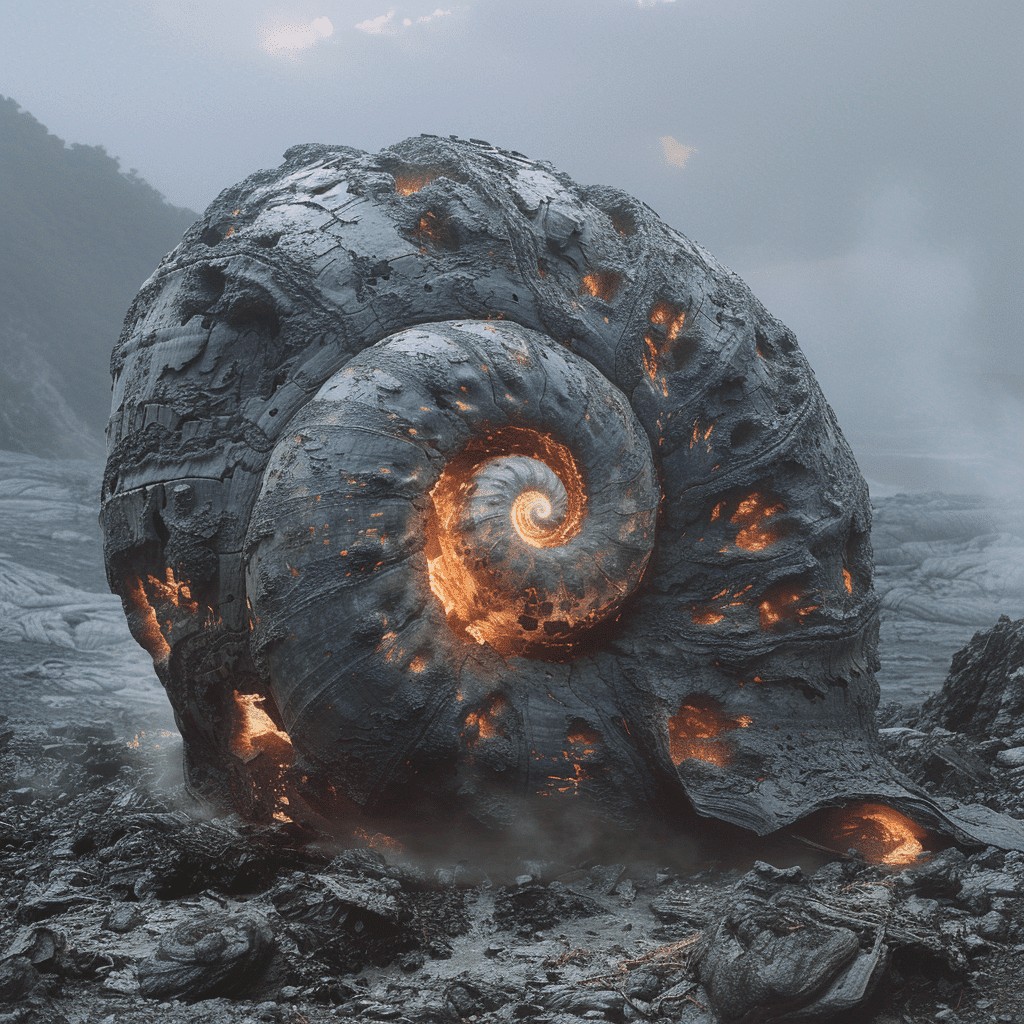
What does the volcano snail eat?
What snail has metal in it?
What are the characteristics of a volcano snail?
Are magma snails real?
Why are volcano snails illegal?
Do volcano snails still exist?
How do volcano snails survive?
Why not to eat snails?
What snail has venom?
Can you buy volcano snail?
How big are lava snails?
Is there a lava snail?
Is The Vampire snail Real?
Are dragon snails real?
This article was produced with AI assistance. How Neuron Magazine uses AI.
Neuron Magazine writes for Neuron Magazine — technology news, science, ai, robots and the future.