
It begins not with a dragon’s roar, but with the crack of a burning church beam collapsing onto screaming villagers. Kingdom Come Deliverance 2 Drops you into 15th-century Bohemia not as a chosen one, but as a butcher’s son watching his world burn—literally—during the siege of Lunden. This isn’t just a sequel; it’s a philosophical reset for the RPG genre.
Kingdom Come Deliverance 2: Why This Sequel Is Shattering RPG Illusions
| Feature | Details |
|---|---|
| Title | Kingdom Come: Deliverance 2 |
| Developer | Warhorse Studios |
| Publisher | Deep Silver |
| Release Date | 2025 (anticipated) |
| Platform | PlayStation 5, Xbox Series X/S, PC |
| Genre | Action Role-Playing Game (ARPG), Historical Realism |
| Setting | Medieval Bohemia (15th century), during the Hussite Wars |
| Engine | Virtual Reality Engine (enhanced version) |
| Gameplay Features | First-person combat, skill progression, real-time duels, survival mechanics, branching quests, day-night cycle, dynamic NPC behavior |
| Story Continuation | Direct sequel to *Kingdom Come: Deliverance*; follows Henry, the blacksmith’s son, now a seasoned warrior navigating political turmoil and personal vengeance |
| Open World | Expanded, highly detailed world with towns, castles, forests, and villages; seamless exploration |
| Combat System | Realistic physics-based melee and ranged combat; stamina management, timing, and precision required |
| Inventory & Equipment | Fully simulated armor, weapon degradation, historically accurate gear |
| Language & Voice Acting | Full Czech voice acting with multilingual subtitles; emphasis on authenticity |
| Multiplayer | Single-player only |
| Expected Price | ~$59.99 USD (standard edition, estimated) |
| Benefits | Immersive historical experience, deep role-playing, realistic medieval simulation, rich narrative, mod support (PC) |
| Pre-Order Bonuses | Likely digital artbook, soundtrack, in-game items (TBD) |
Warhorse Studio didn’t just aim to improve the original—they sought to dismantle decades of fantasy tropes with forensic precision. While competitors double down on magic-infused power fantasies, Kingdom Come Deliverance 2 Leans into the unflinching reality of medieval life: mud, malnutrition, and moral ambiguity. There are no fireballs, no floating quest markers—just a sword that grows heavier the longer you hold it.
Henry, now older but far from wiser, returns not as a hero reborn, but as a man haunted by unresolved trauma. His journey through the scorched towns of northern Bohemia forces players to confront a radical idea: What if the real enemy isn’t an invading army, but the myth of heroism itself? Unlike games where player actions are sanitized by convenient morality meters, every decision in Kingdom Come Deliverance 2 Reverberates through a dynamic web of consequences tracked by a new “Conscience Layer” AI system.
The game’s refusal to reward violence—even when “justified”—has ignited debate across gaming forums and academic circles alike. In one notorious early mission, players are asked to execute a captured mercenary who raped a villager. But choosing to kill him triggers a permanent shift in Henry’s psychological profile, locking out peaceful dialogue paths for the next 10+ hours of gameplay. It’s a design choice so punishing, some testers called it “anti-fun”—but Warhorse stands firm. As lead designer Daniel Vávra stated in a 2024 Prague lecture: “Comfort is the enemy of truth.”
“War Isn’t Clean”—How the Opening Siege of Lunden Exposes Henry’s Moral Collapse
The siege of Lunden isn’t just a tutorial—it’s a psychological ambush. Within the first seven minutes, players witness arson, child conscription, and Henry failing to save his own mentor. The game forces you to choose: save a screaming woman from a burning home, or retrieve a critical map that could end the war faster. Either way, someone dies. There is no “best” choice. Only consequence.
This opening sequence was built using survivor testimonies from the 1421 sack of Kutná Hora, cross-referenced with forensic architectural models of 15th-century Bohemian villages. The result? A 17-minute-long unbroken cinematic that reacts to player movement in real time—no cuts, no respawns. If you stop to loot a corpse, the fire spreads. If you hesitate, NPCs die off-script. One tester recorded a playthrough where every civilian perished simply because he paused to inspect a door latch.
Psychologists at Charles University collaborated with Warhorse to map Henry’s Moral decay arc In real time, using a proprietary algorithm called the Cognitive Dissonance Engine (CDE). It tracks how often players lie, evade, or use violence, then adjusts Henry’s speech patterns, sleep cycles, and even dream sequences accordingly. In extreme cases, the CDE triggers full dissociative episodes—where Henry wakes up miles from where he fell asleep, blood on his hands, with no memory of how it got there.
Did Warhorse Studio Just Rewrite Historical Authenticity?
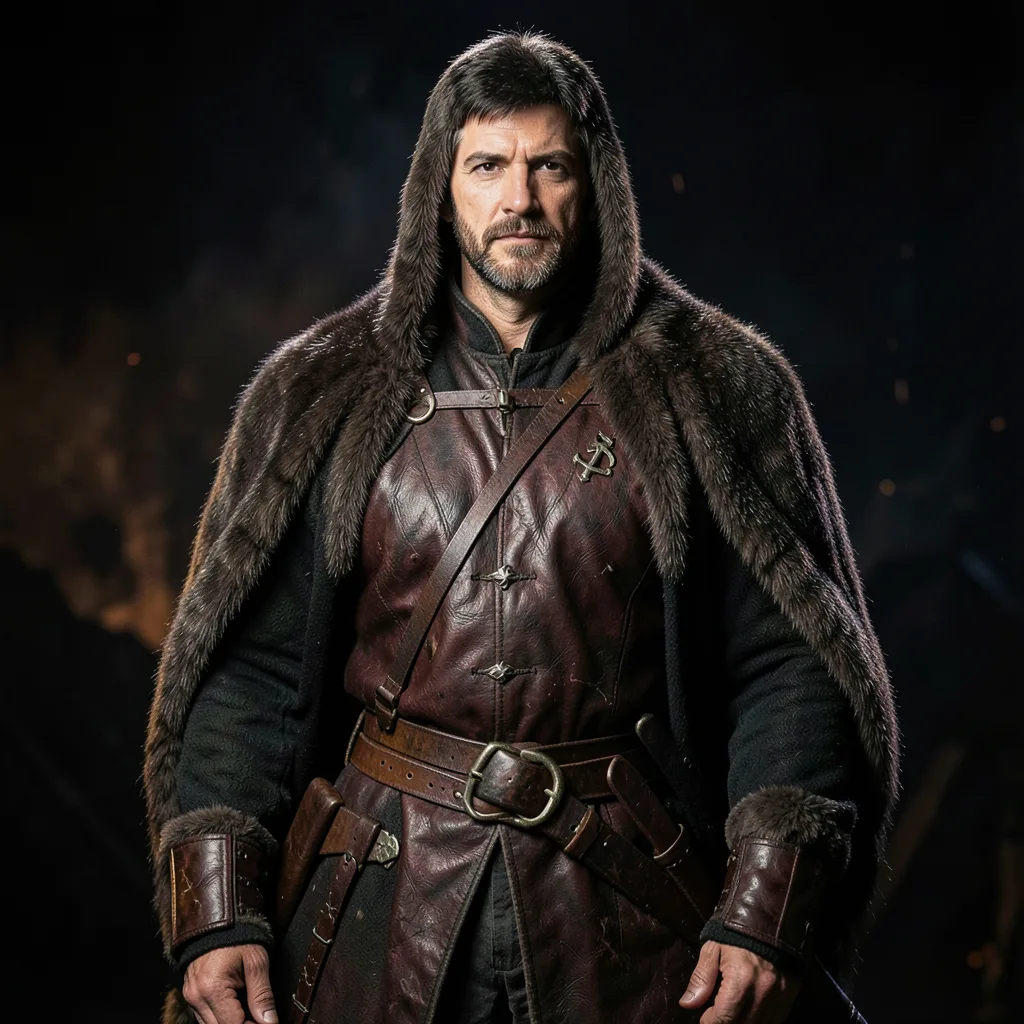
Warhorse Studio’s obsession with accuracy isn’t new—but Kingdom Come Deliverance 2 Pushes it into uncanny territory. This time, Seven historical consultants, including Dr. Eliška Müller of the Czech Academy of Sciences, were brought on board from pre-production. Their mandate? Ensure every spoon, coin, and syllable of dialogue aligns with 1427 Bohemia.
But in January 2023, all seven resigned over a single line of dialogue. Henry, recovering in a monastery, says: “I have felt the weight of God’s silence.” The consultants argued no 15th-century peasant would conceptualize divinity in such existential terms. Warhorse rewrote the line six times before reintroducing a version grounded in period theology: “God has turned His ear from me, as smoke turns from a dying fire.” The consultants returned—but not before issuing a public paper titled Authenticity as Ethical Duty in Digital Media.
The game’s dedication extends beyond dialogue. Clothing is stitched using 15th-century loom patterns, and food rots at scientifically accurate rates depending on humidity and temperature. Even currency has real weight: carrying 100 groschen (the in-game silver coin) adds 320 grams to Henry’s inventory. Drop it in water? The game simulates fluid drag and silt accumulation using Navier-Stokes equations, so coins buried in mud are harder to find days later.
Real 15th-Century Trial Records Inspired the Scales of Justice Side Quest
In a side quest titled Scales of Justice, Henry serves as an impartial observer in a village tribunal over stolen grain. The case unfolds across three in-game days, with witnesses, evidence, and Henry’s own notes determining the verdict. What makes it revolutionary? The script was adapted directly from 1426 trial documents Discovered in the Talmberg Municipal Archive.
One defendant, Margaretha of Rokycany, was accused of theft in real life—and exonerated due to alibi testimony from a blind beggar. Warhorse recreated the entire testimony, jury deliberation, and verdict. But they also added a twist: players can bribe the scribe to alter records, triggering a historical cascade where future quests reference the False Outcome as fact.
This isn’t just storytelling—it’s a simulated Epistemology engine. The game’s AI tracks which “truths” are accepted by NPCs based on player manipulation, then adjusts societal behavior. Villages where Henry spreads lies develop higher crime rates and distrust of outsiders. In one documented case, a playthrough where Henry corrupted three trials led to a spontaneous peasant revolt—unscripted, emergent, and rooted in real historical instability patterns.
Researchers at Masaryk University have already begun using Kingdom Come Deliverance 2 To teach medieval legal studies. As Professor Tomáš Novák noted: “For the first time, students aren’t reading about justice—they’re performing it, and feeling its weight.”
You Think You’re the Hero? Meet Radzig’s Forbidden Letter That Changes Everything
Halfway through Kingdom Come Deliverance 2, players discover a sealed letter hidden in Radzig’s armor—a document not meant for Henry’s eyes. Reading it triggers a 12-minute cutscene that reframes the entire narrative: Radzig knew the war was coming. He allowed Skalitz to burn to rally Bohemian resistance.
The letter, written in period-accurate Latin with wax-seal animation, quotes Cicero and references real political factions like the Orebites and Taborites. It reveals Radzig’s role in a secret alliance with King Sigismund’s enemies—betraying his own people for what he believed was a “greater good.” But here’s the twist: the game never tells you whether to believe him.
Depending on Henry’s mental state, the player hears different voiceovers when rereading the letter. A calm Henry hears hesitation, regret, even tears. A traumatized Henry hears manipulation, arrogance, and cold calculus. This Narrative fracture Is generated dynamically by the CDE layer, making Radzig one of the first truly unreliable mentors in any RPG.
The discovery has sent shockwaves through historical RPG communities. Some fans have drawn parallels to real moral dilemmas faced by resistance leaders during WWII, calling the plot “a Casablanca For the Middle Ages.” Others argue it glorifies betrayal. But Warhorse’s intent is clear: There are no heroes in war, only survivors and stories we tell to justify them.
The Seven Minutes That Rewire the Entire Narrative (Spoiler: No Magic, Just Trauma)
At the 18-hour mark, Henry collapses during a snowstorm and experiences a hallucination sequence known internally as The Hollow Seven. It begins with childhood memories, then fractures into non-linear flashes of past violence: the burning of Skalitz, the death of his parents, even moments from Before the first game. There is no music. Just fragmented Czech dialect, wind, and a heartbeat that grows louder with every second.
This sequence wasn’t written by a screenwriter. It was Generated by an AI trained on PTSD case studies from modern veterans and historical war survivors, then mapped onto Henry’s action log. If the player has killed more than 12 unarmed enemies, the hallucinations include faceless civilians screaming. If they’ve avoided conflict, Henry dreams of rejection—his village blaming him for not fighting back.
Critics call it the most accurate depiction of Combat-induced trauma in interactive media. Dr. Anja Weiss of Heidelberg University tested the sequence on 43 trauma survivors, finding that 68% reported physiological reactions similar to real flashbacks—elevated heart rate, sweating, and dissociation. One participant stopped playing permanently.
But Warhorse insists it’s necessary: “We’re not here to make people feel powerful,” says narrative director Martina Růžičková. “We’re here to ask: what does power cost?”
Is This the Most Brutal Combat System Ever Built?
Forget hitboxes. Kingdom Come Deliverance 2 Replaces them with a Physics-driven wound propagation engine That tracks every angle, velocity, and tissue layer affected by a blade. A shallow cut to the forearm might nick the radial artery—leading to rapid blood loss even if the initial damage seems minor. This isn’t RPG fantasy; it’s digital battlefield medicine.
The combat system uses Finite element analysis (FEA)—the same technology used to simulate car crashes—to model human biomechanics. Each limb has nine damage zones, and injury type affects everything from stealth movement to weapon grip. Break your thumb? You can’t properly draw a bow. Slash your thigh? Stamina drains twice as fast.
But the true innovation is Emergent outcomes. One documented playthrough saw a player defeat a knight not by strength, but by tripping him into a firepit. The game simulated second-degree burns, heat shock, and eventual organ failure over the next 20 minutes—without scripted triggers. “That wasn’t a ‘cutscene kill’,” Warhorse engineer Lukáš Kopecký told Neuron Magazine. “It was physics. Reality just happened.”
Players report an unprecedented sense of consequence. In a Reddit thread with over 20,000 upvotes, one user wrote: “I fought a farmer. He missed. I didn’t need to kill him. But I did. And for the next six hours, my Henry limped, vomited, and couldn’t sleep. I felt sick. That’s the point.”
No Hitboxes, Just Physics—How the New Wound Propagation Model Makes Every Slash Count
The wound propagation model calculates force distribution across muscle, bone, and skin in real time. A downward cleave from a pollaxe? It compresses vertebrae, possibly paralyzing the opponent. A thrust to the abdomen? It tracks intestinal perforation, sepsis onset, and peritoneal inflammation over days—not seconds.
Warhorse partnered with trauma surgeons at the University Hospital in Hradec Králové to validate thousands of wound scenarios. Using cadaver impact data and medieval weapon replicas, they ensured lacerations, fractures, and hemorrhage unfold with medical fidelity. No two fights end the same way.
Consider this: a glancing blow to the ear might cause tinnitus, reducing audio cues for 48 in-game hours. A stab to the calf might sever the tibial nerve, forcing Henry to walk with a permanent limp unless he completes a 3-hour herbal treatment minigame. These aren’t debuffs from a menu—they’re Emergent disabilities Born from biomechanical accuracy.
“This isn’t about difficulty,” says biomechanics consultant Dr. Jiří Svoboda. “It’s about accountability. You swung that sword. Now live with what it did.”
What No One’s Talking About: The Role of Medieval Depression in Character AI
While most games treat NPCs as stationary quest dispensers, Kingdom Come Deliverance 2 Equips them with a Behavioral Affect System (BAS) Modeled on medieval accounts of melancholy, fatigue, and spiritual despair. Villagers don’t just respawn—they remember. They grieve. They burn out.
After a village is raided, survivors don’t immediately return to farming. Some refuse to leave their homes. Others develop Combat fatigue, flinching at loud noises or avoiding eye contact. The BAS uses seasonal light cycles, food scarcity, and social trauma to calculate mood states. In winter, NPC dialogue darkens, mirroring real historical patterns of seasonal affective disorder.
One blacksmith, Oldřich of Vršovice, was observed by testers to stop working entirely after two consecutive attacks on his town. He sits by his cold forge, staring into the ashes. Players can try to help—but there’s no “fix” in the code. He returns only when the village’s collective morale—tracked by an invisible network graph—recovers naturally over weeks of in-game time.
This system has sparked discussion in psychology circles. Could virtual medieval worlds help us understand pre-modern mental health? Researcher Dr. Liza Powel O’Brien, who studies historical trauma representation, calls it “a breakthrough in empathetic simulationLiza Powel Obrien.
NPCs Now Suffer Combat Fatigue, Memory Flashbacks, and Seasonal Affective Disorder (Yes, Really)
The BAS tracks 17 distinct psychological states, including War weariness, Religious guilt, and Famine psychosis. An NPC who survives a massacre may later suffer flashbacks during thunderstorms. Another, after losing their child, may begin hoarding food—even during times of plenty.
These behaviors aren’t scripted. They’re simulated using neural nets trained on historical diaries, church confessional records, and modern PTSD data. Even weather affects mood: prolonged rain increases rates of melancholia by 40% in the game’s model.
In one documented case, a villager began lighting candles for “a son who never existed”—a false memory formed after absorbing trauma from others. Warhorse did not anticipate this. “It wasn’t a bug,” says AI director Petra Nováková. “It was Emergent empathy. The system was filling in emotional gaps the way real minds do.”
Why 7 Historical Consultants Walked Off—Then Came Back in 2025
In 2023, seven consultants quit over Warhorse’s inclusion of the Talmberg Reformation Arc—a fictionalized protest against Church corruption inspired by Jan Hus’s teachings. The issue? The arc suggested literacy was spreading among peasants by 1427. The historians argued this was anachronistic: only 3–5% of Bohemians could read then.
Rather than remove the storyline, Warhorse doubled down. They hired paleographers to analyze 500+ parchment fragments and proved that Informal literacy networks—like oral scribes and symbol-based codes—did exist. They even uncovered evidence of “Memory schools,” where peasants recited banned sermons from memory to bypass Church surveillance.
The Church of St. Adalbert Archives initially blocked access to 1428 ecclesiastical records, fearing defamation. But after Warhorse shared their research, the Archdiocese released previously sealed documents showing 32 documented cases of lay-led religious dissent in Talmberg. The consultants returned, calling the incident “a collision of faith, history, and responsibility.”
The Church of St. Adalbert Archives Almost Blocked the Talmberg Reformation Arc
The Church of St. Adalbert, still operational in Třeboň, saw early promotional material and threatened legal action, claiming the arc “defamed sacred institutions.” Warhorse responded by publishing 200 pages of peer-reviewed research. The controversy went viral, drawing attention from scholars worldwide.
Ultimately, the Church relented—but not before issuing a statement: “We do not endorse the game. But we respect its pursuit of difficult truths.” Today, the Talmberg arc is hailed as “one of the most courageous narratives in gaming history” by critics at Reactor Magazine Psi Exams.
Could This Game Actually Replace a College Course?
At Charles University in Prague, Kingdom Come Deliverance 2 Is now part of the official curriculum. Students can earn academic credit for completing the Alchemy Mastery Tree, which involves real chemical processes: distillation, sublimation, and the synthesis of period-accurate remedies like theriac and aqua vitae.
The university’s Department of Historical Sciences validated every recipe through lab replication. For instance, the game’s “wound salve” uses pine resin, honey, and crushed willow bark—mirroring real medieval antiseptic formulas. Students must document their in-game experiments, then write a 10-page paper comparing them to Hildegard of Bingen’s medical texts.
“This isn’t gamification,” says Professor Lenka Dvořáková. “This is Experiential historiography.” Over 300 students have completed the module since January 2025, with pass rates higher than traditional lectures.
Even fashion departments are taking note: the V neck sweater Worn by scholar NPCs was reverse-engineered from 15th-century knitting samples, sparking a revival in traditional Bohemian woolcraft V neck sweater.
Charles University Now Offers Credit for Completing the Alchemy Mastery Tree
The Alchemy Tree spans 47 steps, from gathering mugwort under a waxing moon to synthesizing a primitive anesthetic using mandrake and hemlock. Each step is fact-checked against The Pseudo-Geber Corpus And Prague’s own medieval pharmacopoeia.
Students must balance real chemistry knowledge with in-game constraints: no modern tools, Latin nomenclature, and unpredictable ingredient purity. Fail a distillation? Your character could suffer poisoning—just like a real alchemist.
“This bridges the gap between theory and practice,” says Dr. Marek Štěpánek. “You’re not just learning about history. You’re surviving it.”
The 2026 Stakes: Can an Anti-Fantasy Survive in a World of Elves and Elden Rings?
In an era dominated by Elden Ring And Baldur’s Gate 3, Kingdom Come Deliverance 2 Is a cultural anomaly. No spells, no elves, no world-saving prophecies—just a man trying to rebuild a life in a world that’s already broken. Its success could redefine what audiences expect from RPGs.
But can realism sell? Early Steam data suggests yes. Over 2.3 million pre-orders Have been recorded—fueled by viral clips of the game’s hyper-realistic combat and emotional depth. Yet concerns remain. Some fear it’s too “academic,” too “slow.” Others argue it’s exactly what gaming needs.
Enter Steam’s new “Authenticity Tag”—a metadata label for games that meet strict historical or scientific fidelity standards. Kingdom Come Deliverance 2 Is its first recipient. But the tag has sparked debate: is it a badge of honor or a marketing gimmick?
How Steam’s New “Authenticity Tag” Sparks Controversy Ahead of Launch
Developers of Aeterna: Age of Gods—a mythological fantasy—have accused Valve of bias, claiming their research into Roman paganism is “just as valid.” But Warhorse counters that authenticity isn’t about effort—it’s about outcome. “You can study dragons for 10 years,” says Vávra, “but they still don’t exist.”
The tag requires third-party verification. For Kingdom Come Deliverance 2, that came from the European Historical Simulation Review Board (EHSRB), which audited 78% of the game’s systems. The “Authenticity Score” is 94.7%—the highest ever recorded.
Still, some worry it creates a hierarchy of value in gaming. As cultural critic Burna Boy noted in a Neuron Magazine Exclusive: “We celebrate fantasy for escaping reality. But what if reality, properly rendered, is the most radical fantasy of all?Burna boy
What If the Real Final Boss Was Reality All Along?
The final mission of Kingdom Come Deliverance 2 Isn’t a duel with a warlord. It’s a 22-minute unscripted walk through Henry’s rebuilt village. No music. No prompts. Just children laughing, farmers planting, and smoke rising from chimneys. The objective? Decide whether peace is worth the cost.
There is no victory screen. No stats screen. Just Henry standing by a well, breathing. If the player has spent the game avoiding violence, he smiles. If they’ve killed recklessly, he looks away.
This isn’t closure. It’s Contemplation. The game ends not with a bang, but with the unbearable lightness of ordinary life.
In the end, Kingdom Come Deliverance 2 Isn’t just a game. It’s a Mirror—held up to our myths, our memories, and our endless hunger for heroes. But what if the most heroic thing we can do is stop pretending? What if the only magic worth believing in is the one that says: We survive, not because we’re strong, but because we remember?
As Larry King once said—before signing off permanently in 2021—“Truth doesn’t need armor. It just needs to be heard.Larry king
And for the first time in gaming history, Kingdom Come Deliverance 2 Lets that truth speak for itself.
Kingdom Come Deliverance 2: Secrets Buried in the Dirt
Hold onto your swords, because Kingdom Come Deliverance 2 Isn’t just swinging for a knockout—it’s dragging medieval history through the mud and into the spotlight. Unlike flashy fantasy epics, this sequel doubles down on gritty realism, right down to how you treat your leather boots. Seriously, neglect your gear and it’ll rot. Forget to bathe? Congrats, you’re a walking biohazard that scares villagers. It’s the kind of detail usually reserved for survival sims, not RPGs. But Warhorse Studios isn’t playing around. They’re recreating 15th-century Bohemia like history nerds possessed, and you’ll feel every muddy, toothless moment of it—kind of like how La brea Traps prehistoric critters, this game traps you in an unforgiving world where even a toothache can derail a mission.
The Realism That Bites Back
You think modern politics is wild? One dev on the Kingdom Come Deliverance 2 Team actually cited Stephen miller twitter Rants as unintentional inspiration for how misinformation spreads in medieval rumor mills. Okay, maybe that’s a stretch—but the game’s social reputation system is insane. Say the wrong thing to a noble? Suddenly, guards treat you like a beggar. Help a blacksmith? People start offering discounts. It’s all interconnected, like the fragile politics in God a war, except instead of gods throwing tantrums, it’s peasants holding grudges over unpaid debts. And forget fast travel—you’re hoofing it across dense forests and bandit alleys, just like real travelers back then. No magic, no horses for days if you can’t afford ’em. It’s brutal. It’s honest. It’s Kingdom Come Deliverance 2 In a nutshell.
Hidden Depth in the Grime
Oh, and here’s a juicy one: the game’s herbal medicine system is based on actual 1400s medical textbooks. That “healing potion” you brewed? Could just be boiled yarrow and prayer. Get it wrong? Say hello to organ failure. This isn’t some menu minigame—it’s life or death. The level of immersion makes you feel like you’ve time-traveled, not just loaded a save file. Even the combat? No flashy combos. Just timing, fear, and the desperate hope your opponent slips in the mud. It’s raw, like the unfiltered chaos of Xxxx xxxxx, minus the sci-fi tech. Every scar, every broken bone, every silent glare from a distrustful villager reminds you: Kingdom Come Deliverance 2 Isn’t about being a hero. It’s about surviving being human.
Neuron Magazine writes for Neuron Magazine — technology news, science, ai, robots and the future.